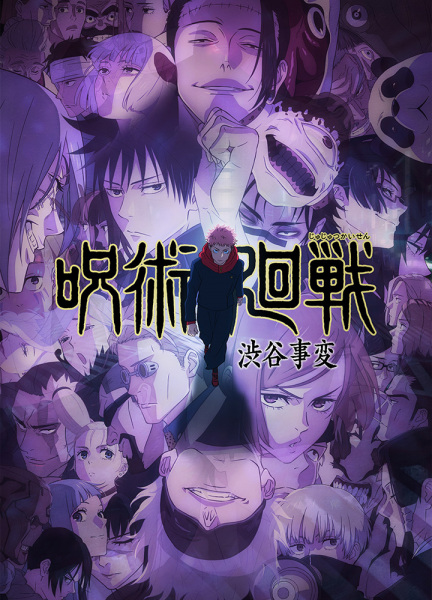
Jujutsu Kaisen
Where to watch
Summary
Jujutsu Kaisen's second season is the rare shonen sequel that surpasses its debut by committing fully to tragedy. The Hidden Inventory prequel reframes Gojo from invincible mentor to a young man whose worldview was broken in a single mission, and Shibuya then collects on that emotional debt with brutal precision — Nanami's death, Gojo's sealing, and Itadori's possession landing as genuine narrative consequences rather than reversible shonen setbacks. The season's ambition is enormous: parallel battles, a dozen POV characters, and a power system that finally pays off its dense rulebook in domain clashes and binding-vow gambits. Its weaknesses are real, though. Gege's plotting can be opaque, with key characters (Nobara, Megumi) sidelined or left in limbo, and certain villain humanization beats feel unearned. The infamous MAPPA production crunch shows in inconsistent in-between animation even as standout episodes deliver career-best sakuga. Within shonen conventions, it represents a maturation of the genre's willingness to kill, to refuse catharsis, and to treat its mentor figure as a tragic rather than aspirational character — a high-water mark for modern Jump adaptations, even if the manga's structural flaws are inherited along with its strengths.
Criterion breakdown
Story & narrative
The Hidden Inventory prequel arc is structurally elegant — establishing Gojo and Geto's fracture point with tragic inevitability before the Shibuya Incident weaponizes that backstory. Shibuya itself is one of the most ambitious sustained narrative setpieces in modern shonen, juggling a dozen sorcerers and antagonists across a single night, though the sheer density of cross-cutting can make Mahito's parallel plot and Toji's resurrection feel rushed for non-manga readers.
Character writing & growth
Gojo and Geto's ideological split — from the Star Plasma Vessel failure to Riko's death to the village massacre — is the most psychologically coherent character arc Gege has written, giving the season unusual weight. Nanami's exhausted-salaryman death and Itadori's collapse after being used as Sukuna's vessel hit hard, though Megumi remains frustratingly opaque and characters like Nobara are sidelined with ambiguous fates that feel more like authorial shrugs than deliberate choices.
Themes & emotional resonance
The Geto arc earnestly engages with sorcerer/non-sorcerer apartheid and the moral cost of protecting people who can't perceive their saviors — a more pointed thematic spine than season one offered. Shibuya's depiction of civilians as collateral and Mahito's nihilist sermon on the soul give the season real ideological texture, though some threads (Jogo's humanity speech, Choso's brotherhood pivot) lean on sentimentality the writing hasn't earned.
World-building & power system
Domain Expansions become genuinely tactical here — Dagon's beach, Sukuna's Malevolent Shrine cleaving Shibuya in half, and the binding-vow mechanics around Prison Realm show the system has real internal logic beyond power-scaling. The cursed technique rules remain dense to the point of requiring exposition dumps, and Gege's tendency to introduce new mechanics mid-fight (Black Flash chains, simple domains) occasionally feels reactive rather than designed.
Animation & direction
Despite well-documented production turmoil, episodes like 'Right and Wrong' (Toji vs. Gojo) and the Mahito/Itadori finale feature some of the year's best fight choreography, with Hakari Asahi and the Shibuya directorial team using impact frames and negative space distinctively. Consistency suffers in later episodes — the Sukuna rampage has standout cuts surrounded by visibly compromised in-betweens — and MAPPA's labor practices became part of the conversation around the season's quality.
Cultural impact
Shibuya turned JJK into a global event — episode drops trended worldwide weekly, the Gojo sealing became a meme-and-mourning phenomenon, and the season drove manga sales and figure markets at a scale rivaling Demon Slayer's Mugen Train moment. It also intensified industry-wide scrutiny of MAPPA's production conditions, making it culturally significant beyond just fandom.
Synopsis (from MAL)
The year is 2006, and the halls of Tokyo Prefectural Jujutsu High School echo with the endless bickering and intense debate between two inseparable best friends. Exuding unshakeable confidence, Satoru Gojou and Suguru Getou believe there is no challenge too great for young and powerful Special Grade sorcerers such as themselves. They are tasked with safely delivering a sensible girl named Riko Amanai to the entity whose existence is the very essence of the jujutsu world. However, the mission plunges them into an exhausting swirl of moral conflict that threatens to destroy the already feeble amity between sorcerers and ordinary humans. Twelve years later, students and sorcerers are the frontline defense against the rising number of high-level curses born from humans' negative emotions. As the entities grow in power, their self-awareness and ambition increase too. The curses unite for the common goal of eradicating humans and creating a world of only cursed energy users, led by a dangerous, ancient cursed spirit. To dispose of their greatest obstacle—the strongest sorcerer, Gojou—they orchestrate an attack at Shibuya Station on Halloween. Dividing into teams, the sorcerers enter the fight prepared to risk everything to protect the innocent and their own kind. [Written by MAL Rewrite]