Chainsaw Man
Where to watch
Summary
Chainsaw Man stands out in modern shonen by weaponizing the genre's own conventions: Denji is a protagonist whose ambitions are pointedly small and crude, which makes the exploitation by Makima and Public Safety cut deeper than typical chosen-one narratives. Fujimoto's willingness to kill named characters without ceremony (Himeno especially) and to treat devil contracts as Faustian body horror gives the world genuine stakes that distinguish it from contemporaries. The fear-based devil system is one of the more conceptually fresh power frameworks in years. MAPPA's adaptation is divisive but ambitious — Nakayama's cinematic, sakuga-forward direction with live-action framing is a clear authorial choice, even when the CG chainsaws and subdued color palette dampen the manga's gonzo energy. The principal weakness of the 12-episode run is structural: it ends before the Makima arc resolves, leaving the season feeling like extended setup rather than a complete statement, and supporting hunters remain thin. Within shonen, it's a confident, tonally daring entry that earns its hype through character writing and worldbuilding more than through narrative completeness, and its full standing will depend on whether subsequent seasons deliver the Control Devil payoff the manga provides.
Criterion breakdown
Story & narrative
The Season 1 adaptation covers introductory arcs (Bat Devil, Eternity Devil, Katana Man, Bomb Girl) that function more as escalating vignettes than a tightly-plotted arc, since the Makima endgame is deferred. Fujimoto's structural strength — subverting shonen beats with sudden brutal deaths like Himeno's or Power's hostage twist — comes through, but the season ends mid-momentum without a true climactic payoff, which hurts it relative to peers with self-contained cours.
Character writing & growth
Denji is a refreshingly base shonen protagonist whose motivations (bread with jam, touching a breast) are deployed as genuine pathos rather than gags, and Power's feral selfishness paired with Aki's quiet grief over Himeno creates a strong trio dynamic. Makima's manipulative ambiguity is well-seeded. Weakness: side hunters like Kobeni and Arai get little interiority, and Aki's growth largely stalls within these 12 episodes.
Themes & emotional resonance
The show interrogates shonen wish-fulfillment itself — Denji's lowered-bar dreams expose how exploitation dresses up as opportunity, and Himeno's death scene crystallizes the futility of the devil hunter pipeline. The Eternity Devil arc's nihilism and Aki's revenge arc give it more thematic weight than typical battle shonen, though the deeper Makima/control themes remain largely setup here.
World-building & power system
The fear-based devil system (Gun Devil's power tied to global gun deaths, Bomb, Future, Darkness Devils) is one of the more conceptually inventive power frameworks in recent shonen, with contracts demanding tangible bodily cost. The alternate-1990s setting with Soviet-era geopolitics gives texture, though much of the cosmology is only hinted at in S1.
Animation & direction
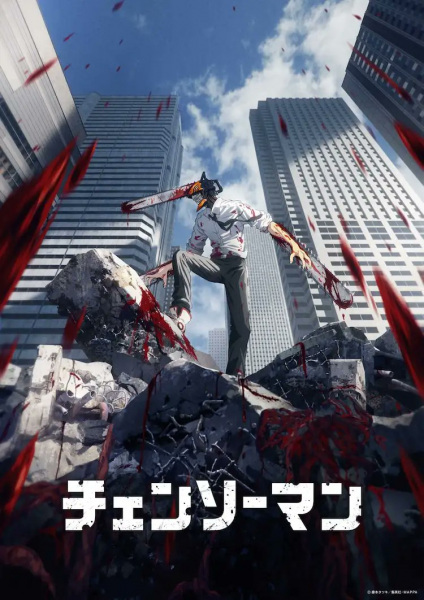
Nakayama Ryu's direction leans heavily on cinematic, live-action framing — handheld shake, naturalistic lighting, Kenshi Yonezu OP and the 12 different EDs — which is technically impressive and distinctive. However, the heavy 3DCG integration during chainsaw transformations divided viewers, and the muted color grading sometimes flattens the manga's manic energy; the Katana Man fight is strong but not transcendent.
Cultural impact
Massive pre-release hype, record-breaking manga sales, and the Yonezu OP becoming a global hit made it the marquee shonen debut of 2022. However, fan reception was notably split over MAPPA's cinematic direction versus Fujimoto's tonal whiplash, and it hasn't yet displaced Jump's titans in lasting cultural footprint.
Synopsis (from MAL)
Denji is robbed of a normal teenage life, left with nothing but his deadbeat father's overwhelming debt. His only companion is his pet, the chainsaw devil Pochita, with whom he slays devils for money that inevitably ends up in the yakuza's pockets. All Denji can do is dream of a good, simple life: one with delicious food and a beautiful girlfriend by his side. But an act of greedy betrayal by the yakuza leads to Denji's brutal, untimely death, crushing all hope of him ever achieving happiness. Remarkably, an old contract allows Pochita to merge with the deceased Denji and bestow devil powers on him, changing him into a hybrid able to transform his body parts into chainsaws. Because Denji's new abilities pose a significant risk to society, the Public Safety Bureau's elite devil hunter Makima takes him in, letting him live as long as he obeys her command. Guided by the promise of a content life alongside an attractive woman, Denji devotes everything and fights with all his might to make his naive dreams a reality. [Written by MAL Rewrite]